writing in music a brief guide pdf
Discover how to compose and export music scores to PDF with ease. Learn key steps: choose notation software, set up staff and clefs, add dynamics, and export with optimal settings. Follow this concise guide to create professional, shareable PDF scores. Use steps publish your scores worldwide.

Overview of Musical Notation Basics
Musical notation is the visual language that translates sound into symbols. At its core, a score uses a five‑line staff to represent pitch ranges, with each line and space corresponding to a specific note. Clefs—treble, bass, alto, tenor—anchor the staff by assigning a reference pitch to a particular line, guiding performers on where to locate notes. Key signatures, placed after the clef, indicate which pitches are consistently sharp or flat throughout a piece, simplifying reading and reducing accidentals. Notes are depicted by oval heads, stems, and flags; their duration—whole, half, quarter, eighth, sixteenth—determines how long a tone is held. Rests mirror notes but signal silence for the same durations. Accidentals (sharps, flats, naturals) modify pitches for a single measure unless a key signature or a ledger indicates otherwise. Time signatures, written as fractions, establish the metric framework, defining how many beats occur in each measure and which note value constitutes one beat. Together, these elements form the foundational grammar that composers and performers rely on to communicate musical ideas accurately and efficiently.
Ledger lines extend the staff for pitches beyond the five lines, allowing high or low notes without altering clefs. Note stems point upward or downward depending on position, and flags or beams group eighths and shorter notes for rhythmic clarity. These conventions give composers cues, very performers interpret pitch, duration, and phrasing ensembles!
Understanding Staff, Clefs, and Key Signatures
The staff is the backbone of written music, consisting of five horizontal lines and four spaces that represent a range of pitches. Clefs—treble, bass, alto, tenor—anchor the staff by assigning a specific pitch to a line, guiding performers on where to locate notes. The treble clef places G above middle C on the second line, while the bass clef places F below middle C on the fourth line. Clefs can also be transposing, such as the alto clef for viola, which shifts the pitch range to accommodate the instrument’s range.
Key signatures sit immediately after the clef and indicate which notes are consistently sharp or flat throughout a piece. A key signature with one sharp (F♯) signals that every F in the score is sharp unless otherwise marked. Similarly, a key signature with two flats (B♭, E♭) means those notes are flat throughout and helps composers choose chords that fit the chosen key.
Key signatures simplify reading by reducing the number of accidentals needed and provide a harmonic framework that guides composers in selecting chords and progressions that fit the chosen key. Understanding the interplay between staff, clef, and key signature is essential for accurate transcription, performance, and composition. Each element informs the others, creating a system that translates sound into a visual format musicians can read and interpret today.

Time Signatures and Tempo Indications
Time signatures define the rhythmic structure of a piece, indicating how many beats are in each measure and which note value receives one beat. The top number, called the numerator, shows the beat count per bar, while the bottom number, the denominator, specifies the note value that constitutes one beat. Common signatures include 4/4, known as “common time,” 3/4 for waltzes, and 6/8 for lilting compound meters. Understanding how to read and write these signatures is crucial for composers, arrangers, and performers alike, as they establish the pulse that guides phrasing, articulation, and ensemble coordination. Tempo indications, on the other hand, provide a speed reference, typically expressed in beats per minute (BPM) or descriptive Italian terms such as Allegro, Andante, or Adagio. These markings inform performers of the intended pace, allowing them to balance rhythmic precision with expressive nuance. When composing, the choice of time signature and tempo can dramatically shape the emotional character of a piece; a brisk 120 BPM in 2/4 can feel energetic, whereas a slow 60 BPM in 3/4 may evoke a reflective mood. Modern notation software often offers a range of preset tempo markings and the ability to add metronome clicks, which help maintain consistency during rehearsals and recordings. By mastering both time signatures and tempo indications, musicians can translate rhythmic intent into a coherent, performable score that resonates with audiences and preserves the composer’s artistic vision. It supports clear rhythmic structure.
Dynamics, Articulation, and Expression Marks
Dynamics are the loudness levels that shape a piece’s emotional contour. From pianissimo (pp) to fortissimo (ff), they guide performers on how to project sound. Articulation marks—staccato, legato, tenuto, accent—direct the attack and release of notes, influencing phrasing and texture; Expression marks such as fermata, crescendo, and diminuendo add nuance, indicating sustained pauses or gradual volume changes. Together, these symbols create a language that translates the composer’s intent into audible reality. Modern notation programs allow you to input dynamic markings with keyboard shortcuts or drag‑and‑drop symbols, ensuring consistency across the score. When preparing a PDF, it’s essential to choose a clear, legible font for dynamics and articulation; small, cramped symbols can become unreadable. Additionally, consider the layout: place dynamic markings above the staff line to avoid clutter, and use parentheses for optional cues. For ensemble scores, group dynamics by instrument family to aid sight‑reading. In performance, musicians interpret these marks in context, balancing technical precision with expressive freedom. Proper use of dynamics, articulation, and expression marks turns a simple sequence of notes into a compelling musical narrative, inviting listeners to experience the intended mood and intensity. Mastering these elements is fundamental for any composer or arranger aiming for professional, expressive scores. Use these marks to guide performers, ensuring art intent.
Harmony: Chords and Progressions
Chord theory underpins harmonic language, guiding progression choices that shape a piece’s emotional journey. Begin with root‑based triads, then explore seventh, ninth, and extended chords to add color. Voice leading—ensuring smooth movement between chord tones—creates cohesion. Common progressions like I‑IV‑V‑I provide stability, while ii‑V‑I resolves tension. Modulation, the shift to a new key, can be signaled by pivot chords or direct key changes. Secondary dominants (V/V, V/vi) temporarily tonicize nearby chords, enriching texture. Chromatic approach chords, such as a bII or tritone substitution, inject surprise and forward motion. In jazz, ii‑V‑I and turnaround patterns anchor improvisation. In pop, diatonic progressions with occasional borrowed chords keep hooks memorable. Use Roman‑numeral analysis to annotate scores, aiding performers in understanding functional relationships. When exporting to PDF, ensure chord symbols are legible: choose a clear font, adjust spacing, and place symbols above the staff to avoid clutter. For ensemble scores, indicate inversions and bass notes to guide accompaniment. A well‑structured harmonic framework not only supports melody but also provides a roadmap for performers, enabling expressive interpretation while maintaining compositional intent.By mastering voice leading, inversions, modal interchange, composers can craft seamless harmonic journeys that resonate elevate for fans today! musical narrative.
Melody Construction and Motivic Development
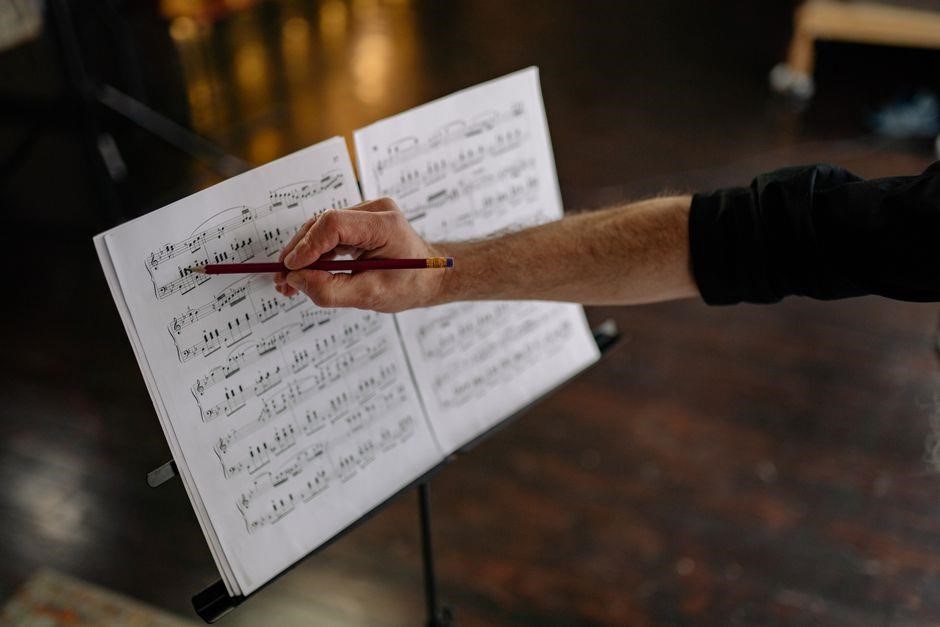
Melody is the narrative thread of a composition, and its construction relies on intervallic choices, rhythmic contour, and motivic economy. Start with a clear intervallic motif—often a step or leap that can be repeated, inverted, or transposed. Motifs should be memorable yet flexible; they can be stretched across phrases or condensed into a single rhythmic cell. Use scalar passages to establish tonality, then introduce chromatic inflections to add tension. Rhythmically, juxtapose long, sustained notes with syncopated figures to create contrast. When developing a motif, apply techniques such as augmentation (lengthening note values), diminution (shortening), fragmentation (splitting into smaller units), and retrograde (playing backward). These transformations preserve thematic identity while providing variety. Harmonically, align melodic motion with chord changes; stepwise motion often follows diatonic harmony, while leaps can emphasize harmonic shifts. Dynamics and articulation marks—staccato, legato, accents—guide expressive delivery. In polyphonic textures, ensure the melody stands out by using a higher register or a distinct timbre. For ensemble scores, write the melody in a part that allows clear sight‑reading, and consider counter‑melodies that complement rather than compete. When exporting to PDF, keep the melodic line legible: use a readable font, appropriate staff spacing, and avoid excessive slurs that can clutter the page. A well‑crafted melody, supported by thoughtful motivic development, becomes the hook that engages listeners and anchors the piece’s structure. In contemporary writing, consider using non‑functional harmony or modal scales to give the melody a fresh color. Also, experiment with rhythmic displacement—starting a motif a beat earlier or later—to create surprise. Finally, always test the melody by humming or playing it on a keyboard to ensure it feels natural and singable. A strong melodic line not only conveys the composer’s intent but also invites performers to interpret with emotional depth. Remember that the melodic contour should mirror the emotional arc of the piece—ascending lines often signal hope, while descending lines can evoke resolution or melancholy. Additionally, using call‑and‑response motifs between instruments can create dialogue and interest. When finalizing the score, review the melody against the accompaniment to ensure balance and clarity. A polished melodic line, combined with effective motivic development, will leave a lasting impression on both performers and listeners alike. If you encounter a melodic fragment that feels weak, try re‑harmonizing the underlying chords or altering the rhythmic placement to give it more forward momentum. Keep the melody concise; avoid unnecessary ornamentation that can distract from the core idea. Rehearse the melody in alternate keys to confirm its adaptability and keep it compelling across settings now!

Rhythmic Patterns and Syncopation Techniques
Rhythmic patterns establish the pulse that propels a piece, while syncopation injects vitality by shifting accents off the expected beats. Start with a steady meter—common time or 4/4—then layer subdivisions such as eighth or sixteenth notes to build a groove. To create syncopated motifs, place a strong accent on a weak beat or an off‑beat, for example accenting the “and” of beat two in a 4/4 measure. Use rests strategically; a rest on a downbeat can create a sudden lift when the next note lands. Polyrhythms—simultaneous contrasting subdivisions—add texture; a 3‑against‑2 pattern is notated with triplet figures over duplets. Swing feel emerges when eighth notes are elongated, giving a triplet pulse; notate this with a swing symbol or by writing triplet brackets over the pair. In ensemble writing, assign syncopated figures to percussive parts or use a bass line that emphasizes off‑beats to drive the groove. When exporting to PDF, keep rhythmic notation clear: use appropriate beam grouping, avoid excessive slurs that blur intent, and keep staff spacing wide enough for complex patterns. Test the rhythm by tapping or a metronome; a syncopated phrase should feel natural at a moderate tempo. These rhythmic choices shape the emotional contour, allowing the piece to swing, breathe, and surprise the listener. Document any special rhythmic instructions—“swing,” “shuffle,” or “triplet feel”—in the score’s header so performers know the intended groove. A strong rhythmic foundation enriched with syncopated textures gives the score compelling drive that engages performers and listeners alike. Feel the groove, then share today!!!

Form and Structure of Musical Pieces
Structure defines the architecture of a composition, guiding listeners through thematic development and emotional peaks. The most common forms—binary, ternary, rondo, and sonata‑allegro—offer predictable frameworks that composers can manipulate. Binary form (AB) splits material into two contrasting sections, often with a return or variation. Ternary form (ABA) introduces a central theme that is framed by contrasting outer sections, creating a sense of resolution. Rondo form (ABACA) repeats a principal theme between contrasting episodes, allowing for both familiarity and surprise. Sonata‑allegro form, rooted in classical tradition, comprises an exposition, development, and recapitulation, each with distinct harmonic and thematic roles. Exposition presents the main themes, development explores and transforms them, and recapitulation restates the original material, often resolving tension. Beyond these, composers employ through‑movement structures, where a single continuous section flows without clear breaks, or theme‑and‑variations, where a motif is repeated with incremental alterations. Understanding form empowers writers to craft coherent narratives, balance repetition with contrast, and deliver satisfying musical journeys. When drafting a score, outline the form first, then populate each section with motifs and progressions. This disciplined approach ensures that every phrase serves the larger design, making the piece memorable.

Using Software for Music Notation (e.g., Finale, Sibelius, MuseScore)
Choosing the right notation program shapes the workflow of a composer. Finale offers a robust set of engraving tools, allowing fine‑tuned control over note spacing, beam angles, and articulations. Its scripting engine enables custom macros, making repetitive tasks fast. Sibelius balances power and usability; its SmartScore feature can import audio or MIDI files, automatically transcribing them into notation, which is ideal for arranging existing recordings. MuseScore, the free open‑source alternative, provides a lightweight interface with a growing library of plugins, and its community forum offers tutorials for advanced techniques. All three programs support PDF export, but the export settings differ: Finale’s “Print” dialog lets you choose resolution, page size, and whether to embed fonts; Sibelius’s “Export PDF” panel allows you to set compression levels and embed images; MuseScore’s “Export” menu offers a simple toggle for high‑quality output. When preparing a score for print, consider page breaks, staff scaling, and the placement of rehearsal marks. For digital distribution, embed the full score in a single PDF with transparent backgrounds to preserve clarity on any device. Additionally, most software can generate MIDI or audio files simultaneously, enabling quick playback checks. By mastering the nuances of each program, composers can streamline their creative process and produce professional‑looking PDFs ready for publication or sharing. Set high‑res for crisp staff lines.

Exporting Scores to PDF: Settings and Tips
When you’re ready to share a finished score, the export step is crucial for preserving the integrity of your notation. Most notation programs—Finale, Sibelius, MuseScore—offer a dedicated PDF export dialog. Begin by selecting a page size that matches your intended use; 8.5×11 inches is standard for print, while 4×6 inches works well for handheld scores. Set the resolution to at least 300 dpi for crisp lines; 600 dpi is recommended for high‑end printing. In the “Advanced” or “Options” panel, enable “Embed Fonts” so that the PDF displays correctly on any system. Turn on “High‑Quality Images” if you’ve inserted custom graphics or rehearsal marks. For multi‑page scores, choose “Keep page breaks” to preserve the layout you designed. If your score contains large chord symbols or complex articulations, enable “Use vector graphics” to avoid pixelation. Some users prefer “Compress PDF” to reduce file size; select “Lossless compression” to keep quality. Finally, preview the PDF before finalizing. Check that all staves, dynamics, and slurs are visible, and that any embedded audio icons appear correctly. Once satisfied, click “Export” and save the file to a secure location. A well‑configured PDF ensures your music looks professional whether printed or viewed on a tablet. Keep a backup of the original project file for future edits. Tip: Always check the PDF on devices before distribution to catch any rendering that might affect readability or layout consistency.
Optimizing PDF for Printing and Digital Distribution
After exporting, fine‑tune the PDF for both print and online use. First, set bleed to 0.125″ on all edges for commercial printing; this prevents white borders after trimming. Use CMYK profiles for printed scores, keep RGB for web‑ready PDFs to avoid color shifts. Embed all fonts and set “Do not subset” to keep the file faithful across devices. For large chord charts, increase line thickness to 0.5 pt; this keeps symbols readable on small paper. If the score contains annotations, use a separate PDF layer that can be toggled on or off—most modern viewers support layer visibility. When preparing a digital version, add a password or digital signature if the score is copyrighted; this offers a layer of protection against unauthorized copying. Compress images with a lossless algorithm to reduce file size without sacrificing clarity. Test the PDF in Adobe Acrobat Reader and on a mobile device; verify that all staves, dynamics, and slurs display correctly. By balancing print‑ready fidelity with web‑friendly performance, ensure your music reaches audiences in the best possible format. Remember to test the final PDF on multiple devices to catch any layout quirks! If you plan to distribute the PDF digitally, consider adding a watermark that displays the title and composer’s name on each page. Finally, keep a backup of the originals file for future edits!! To ensure accessibility, include a descriptive title page and a list of all included instruments!
Copyright and Licensing Considerations for Published PDFs
When publishing a music score as a PDF, the first step is to confirm ownership of all material. If you wrote the composition, you automatically hold the copyright, but any borrowed motifs, sampled audio, or third‑party images must be cleared. The U.S. Copyright Office requires registration for enforceability; a simple online filing can secure a public record. For international releases, the Berne Convention guarantees protection without formal registration, yet registering in each target country strengthens legal standing. Licensing is the next layer: a royalty‑free license (e.g., Creative Commons Zero) allows free distribution, while a standard license (e.g., “All Rights Reserved”) restricts copying. When you embed a digital watermark, you can track unauthorized copies; embed the composer’s name and a unique PDF ID. If you plan to sell the PDF, include a license agreement in the PDF footer or as a separate PDF. This agreement should state the permitted uses, duration, and any geographic restrictions. For performance rights, register the composition with a performing‑rights organization (PRO) such as ASCAP, BMI, or PRS. This ensures that public performances of the score generate royalties. When distributing the PDF online, use a secure host that logs download activity; this data can prove infringement if a copy is leaked.Finally, keep a record of all correspondence and licenses in a digital folder—this documentation is invaluable

Marketing and Sharing Your PDF Scores Online
Promote your PDF scores with a multi‑channel strategy. Start by hosting the file on a reliable platform—GitHub Gist, Google Drive, or a dedicated music site—ensuring the link is short and trackable. Use social media to reach niche audiences: post teaser images on Instagram, share short audio clips on TikTok, and engage in Facebook groups dedicated to sheet‑music enthusiasts. Build an email list via a landing page that offers a free sample or a discount code; nurture subscribers with weekly newsletters that feature new releases, behind‑the‑scenes composition tips, and user testimonials. Leverage music‑sharing communities such as MuseScore, SoundCloud, and Bandcamp; upload the PDF as a downloadable resource and provide a preview of the score. Collaborate with influencers—music teachers, YouTubers, and podcast hosts—to review or perform your work, and offer them a commission or a free copy. Optimize your PDF title and description with relevant keywords (e.g., “easy piano arrangement,” “classical guitar transcription”) to improve search engine visibility. Finally, monitor analytics—track downloads, clicks, and conversion rates to refine your marketing mix and maximize reach. Share your PDF on educational platforms like Sheet Music Plus or Musicnotes, where teachers can purchase and download. Offer a limited‑time discount for early adopters, and encourage reviews on your website. Track engagement metrics to refine future releases and grow your audience organically. Stay tuned, join now! OK!!

Resources and Further Reading for Music Notation
Explore a curated selection of books, online tutorials, and community forums that deepen your understanding of musical notation. Below are recommended resources spanning beginner guides, advanced theory, and practical software tips.
Use these resources to master notation PDF.!!
- “The Complete Music Notation Guide” – A comprehensive reference covering staff, clefs, key signatures, and modern notation practices.
- “Score Writing with Sibelius” – Step‑by‑step instructions for creating professional scores, including dynamic markings and articulation.
- “MuseScore Manual” – Official documentation for the free notation program, featuring export options and PDF best practices.
- “Music Theory for Computer Musicians” – A free online textbook that links harmonic concepts to notation software workflows.
- “The Notator” YouTube Channel – Video lessons on advanced engraving techniques and PDF optimization.
- “Score Exchange” – A repository of user‑submitted scores available for download in PDF and MusicXML formats.
- “PDF Optimization for Print” – A guide by Adobe on reducing file size while preserving resolution for high‑quality prints.
- “Creative Commons Licensing” – An overview of licensing options for distributing your PDF scores online.
- “Music Publishing 101” – A short course covering copyright, distribution, and marketing strategies for independent composers.