Commercial Pilot Study Guide: A Comprehensive Plan
This comprehensive guide prepares aspiring pilots for the FAA Commercial Pilot Certificate, covering knowledge, flight training, and oral exam preparation effectively.
It incorporates updated FAA regulations, procedural changes, and instructional fundamentals, alongside essential study materials like AC 61-65.
Resources include Jason Blair’s oral exam guide and online platforms like GroundSchool, ensuring thorough preparation for success in aviation careers.
The Commercial Pilot Certificate represents a significant milestone in a pilot’s career, enabling them to fly for compensation or hire. This certificate transcends recreational flying, opening doors to diverse professional aviation opportunities, including charter operations, aerial photography, and flight instruction.
Achieving this certification demands a higher level of skill, knowledge, and proficiency than a Private Pilot License. Aspiring commercial pilots must demonstrate expertise in advanced maneuvers, aircraft systems, and regulatory compliance.

This study guide serves as a roadmap, meticulously outlining the necessary steps – from meeting eligibility requirements and mastering the FAA knowledge test to accumulating required flight hours and successfully navigating the oral examination. It’s designed to provide a structured approach to learning, utilizing current FAA resources and proven study techniques, ultimately preparing candidates to confidently pursue a career in aviation.
II. Eligibility Requirements
To qualify for a Commercial Pilot Certificate, specific prerequisites must be met, ensuring candidates possess the necessary foundation for professional flight operations. These requirements encompass both age and educational standards, alongside a valid medical certification.
Applicants must be at least 18 years old and able to read, speak, write, and understand the English language. While a high school diploma isn’t strictly mandated, a strong understanding of mathematics and physics is crucial for success in flight training and knowledge assessments.
Crucially, a current FAA First-Class Medical Certificate is mandatory. This rigorous medical evaluation confirms the pilot’s physical and mental fitness to safely operate an aircraft commercially. Maintaining this medical certificate throughout the pilot’s career is essential for continued flying privileges. Thorough preparation and adherence to these standards are paramount for a smooth certification process.
A. Age and Education
Aspiring commercial pilots must meet specific age and educational criteria established by the FAA. A minimum age of 18 years is required to be eligible for the Commercial Pilot Certificate, reflecting the maturity and responsibility expected of professionals.
While not a strict requirement, possessing a high school diploma or equivalent is highly recommended. A solid educational foundation, particularly in mathematics, physics, and English, significantly aids in understanding complex aviation concepts and regulations.
Furthermore, the ability to read, speak, write, and understand English is non-negotiable, as effective communication is vital for safe flight operations. These prerequisites ensure candidates possess the fundamental skills necessary to succeed in a demanding and safety-critical profession.
B. Medical Certification
Obtaining a First-Class Medical Certificate is a crucial step towards becoming a commercial pilot. This certification, issued by an FAA-authorized Aviation Medical Examiner (AME), verifies a pilot’s physical and mental fitness to safely operate an aircraft for compensation or hire.
The examination is more rigorous than those required for private pilots, encompassing comprehensive assessments of vision, hearing, cardiovascular health, neurological function, and overall medical history. Any disqualifying medical conditions must be addressed and cleared by the FAA before a certificate can be issued.
Maintaining a current First-Class Medical Certificate is essential throughout a commercial pilot’s career, with periodic re-examinations required to ensure continued medical eligibility. This stringent requirement underscores the paramount importance of pilot health and safety in commercial aviation.
III. FAA Knowledge Test Preparation
Success in the FAA Knowledge Test demands focused preparation across several key areas. Thoroughly understanding regulations and airspace classifications is paramount, alongside a strong grasp of meteorological principles impacting flight operations.
Navigation skills, including chart reading and electronic navigation systems, are also critical components of the exam. Furthermore, a solid foundation in aerodynamics and aircraft systems is essential for comprehending the technical aspects of flight.
Utilizing resources like FAA Advisory Circulars (AC 61-65), Gleim’s test preparation book, and online ground school programs such as GroundSchool FAA Knowledge Test, provides comprehensive coverage of the required material. Consistent study and practice with up-to-date FAA questions are vital for achieving a passing score.
A. Areas of Focus: Regulations & Airspace
Mastering FAA regulations is foundational for commercial pilot certification. This includes a deep understanding of Part 61 and Part 91 of the Federal Aviation Regulations, governing pilot certification and general operating rules.
Airspace classification is equally crucial; pilots must confidently identify and operate within various airspace types – Class A, B, C, D, and E – understanding associated requirements and restrictions.
Specific attention should be given to special use airspace, such as restricted areas and military operations areas (MOAs). Knowledge of transponder requirements, communication procedures, and airspace boundaries is vital. Thorough study of relevant FAA publications and practice questions will ensure competency in this critical area, preparing you for both the knowledge test and practical application.
B. Areas of Focus: Meteorology
A robust understanding of meteorology is paramount for safe and efficient commercial flight operations. This encompasses atmospheric stability, cloud formation, and the life cycle of thunderstorms, enabling pilots to anticipate and avoid hazardous weather conditions.
Pilots must interpret weather charts, including surface analysis, prognostic charts, and pilot reports (PIREPs), to assess current and forecast weather. Understanding fronts – cold, warm, occluded, and stationary – and their associated weather patterns is essential.
Furthermore, knowledge of icing conditions, turbulence, and wind shear is critical for risk management. Proficiency in obtaining and interpreting aviation weather reports (METARs, TAFs) will ensure informed decision-making throughout all phases of flight, contributing to enhanced safety and operational efficiency.
C. Areas of Focus: Navigation

Proficient navigation skills are fundamental for commercial pilots, extending beyond visual references to encompass a comprehensive understanding of both traditional and modern techniques. This includes pilotage, dead reckoning, and the skillful use of navigation charts and publications.
Pilots must demonstrate expertise in utilizing navigational aids like VORs, NDBs, and GPS systems, understanding their limitations and potential errors. Thorough knowledge of airspace classifications and associated navigation requirements is crucial for legal and safe flight operations.
Furthermore, understanding magnetic variation, deviation, and wind correction is essential for accurate course plotting and maintaining situational awareness. Mastery of these skills ensures efficient route adherence and precise arrival at intended destinations, vital for commercial flight schedules.
D. Areas of Focus: Aerodynamics & Aircraft Systems
A deep understanding of aerodynamics is paramount for commercial pilots, encompassing lift, drag, thrust, and weight, and how these forces interact during various flight maneuvers. This knowledge extends to stall speeds, load factors, and the impact of atmospheric conditions on aircraft performance.
Equally important is a comprehensive grasp of aircraft systems, including engine operation, fuel systems, electrical systems, and flight controls. Pilots must be able to troubleshoot common malfunctions and understand the implications of system failures on flight safety.
Furthermore, knowledge of aircraft performance charts and calculations is vital for determining takeoff and landing distances, climb gradients, and optimal cruise settings, ensuring efficient and safe flight operations within aircraft limitations.
IV. Flight Training Requirements
Commercial pilot training demands rigorous flight experience, exceeding private pilot standards. Aspiring pilots must accumulate a minimum of 250 hours of total flight time, encompassing diverse conditions and operations to demonstrate proficiency.
Specifically, the FAA requires at least 100 hours of pilot-in-command time, including 50 hours of cross-country flight, with a minimum of 100 nautical mile distance, and 10 hours of instrument training. Furthermore, 10 hours of flight training in a complex or tailwheel aircraft is mandatory.
Night flight experience is also crucial, requiring at least 10 hours of instruction, including one cross-country flight of over 100 nautical miles total distance, and 3 hours of instrument time. These requirements ensure pilots are prepared for a wide range of operational scenarios.
A. Total Flight Time
Achieving the required total flight time is a cornerstone of commercial pilot certification. The FAA mandates a minimum of 250 hours to ensure pilots possess the necessary experience and skill for safe and professional operation.
This total isn’t simply logged hours; it’s a carefully curated accumulation encompassing various flight conditions and complexities. The breakdown includes specific requirements for pilot-in-command time, cross-country flights, night flying, and instrument training, all contributing to a well-rounded skillset.

Documenting these hours meticulously is vital, utilizing a logbook that accurately reflects the type of flight, duration, and conditions encountered. Proper record-keeping is essential for demonstrating compliance during the certificate application process and ensuring a solid foundation for a commercial flying career.
B. Cross-Country Flight Requirements
Cross-country flight experience is paramount for developing a commercial pilot’s navigational skills and decision-making abilities. The FAA requires a minimum of 100 hours of pilot-in-command time in cross-country flight, significantly shaping a pilot’s proficiency.
A qualifying cross-country flight involves a landing at an airport at least 50 nautical miles from the original departure point. These flights necessitate meticulous flight planning, weather analysis, and accurate navigation, honing essential skills for real-world operations.
Furthermore, at least 10 of these cross-country hours must be in airplanes, and a specific 50 nautical mile radius requirement applies. Detailed logging of these flights, including distances and landing locations, is crucial for demonstrating compliance and showcasing a pilot’s cross-country competency.
C. Night Flight Experience
Night flight experience is a critical component of commercial pilot training, demanding heightened awareness and refined skills. The FAA mandates at least 10 hours of flight time specifically conducted at night, preparing pilots for diverse operational scenarios.
This experience must include one cross-country flight of over 100 nautical miles total distance, with landings at three points, and one of those landings being at a controlled airport. Night flying necessitates a thorough understanding of lighting systems, navigation using limited visual cues, and increased reliance on instruments.
Pilots must demonstrate proficiency in night takeoffs, landings, and emergency procedures, ensuring safe and effective operations in low-light conditions. Accurate logging of all night flight hours is essential for meeting regulatory requirements and validating competency.
D. Instrument Time Requirements
Instrument time is paramount for commercial pilot certification, building proficiency in flying solely by reference to instruments. The FAA requires a minimum of 30 hours of instrument time to prepare pilots for challenging weather conditions and complex airspace environments.
This time must include 15 hours with a certified instrument instructor, encompassing flight planning, instrument approaches, and holding procedures. At least three hours must be in actual or simulated instrument conditions, focusing on maintaining control and navigating accurately without visual references.
Furthermore, pilots need to log one cross-country flight of at least 250 nautical miles along airways or by direct routes between airports, with instrument approaches at each destination. Mastering instrument procedures is crucial for safe and efficient commercial operations.
V. Commercial Pilot Oral Exam Preparation
The Commercial Pilot Oral Exam is a critical component of certification, assessing a candidate’s understanding of regulations, aircraft systems, and operational procedures. Preparation requires a thorough review of FAA materials and anticipating potential questions from the examiner.
Understanding the exam format is key; expect a conversational approach, probing your knowledge rather than a strict question-and-answer session. Common questions revolve around regulations, airspace, weather, and aircraft performance. Be prepared to discuss topics like weight and balance, emergency procedures, and cross-country flight planning.
Resources like Jason Blair’s Commercial Pilot Oral Exam Guide are invaluable, providing sample questions and detailed explanations. A strong grasp of AC 61-65 is also essential, as it outlines FAA policies and guidance for commercial pilot operations.
A. Understanding the Exam Format
The Commercial Pilot Oral Exam isn’t a rigid interrogation, but a comprehensive assessment of your aeronautical knowledge and practical application. Examiners employ a conversational style, aiming to gauge your understanding beyond rote memorization.
Expect questions designed to reveal your decision-making process and ability to apply regulations to real-world scenarios. The exam covers a broad spectrum, including regulations, airspace, meteorology, navigation, aircraft systems, and operational procedures. Be prepared to explain concepts in your own words, demonstrating a genuine grasp of the material.
The examiner will likely ask you to “walk through” scenarios, such as pre-flight planning or emergency procedures, to assess your thought process. Thorough preparation and a confident, articulate delivery are crucial for success.
B. Common Oral Exam Questions – Regulations
Expect detailed questioning regarding 14 CFR Parts 61, 91, and 121. Examiners frequently probe your understanding of commercial pilot operating limitations and responsibilities. Be prepared to discuss recent regulatory changes and their impact on commercial operations.

Common questions include scenarios involving minimum equipment requirements, passenger briefings, and aircraft maintenance responsibilities. You’ll likely be asked about airspace classifications, operating requirements within those airspaces, and proper communication procedures.
Demonstrate a firm grasp of prohibited and limited operations, along with the regulations governing flight time and duty limitations. Understanding the requirements for operating under different types of flight plans (IFR, VFR) is also critical. Thoroughly review Advisory Circular 61-65 for detailed regulatory guidance.
C. Common Oral Exam Questions – Aircraft Systems
Prepare for in-depth questioning on aircraft systems, focusing on functionality and operational limitations. Examiners will assess your understanding of the engine, fuel, electrical, hydraulic, and flight control systems of the aircraft you intend to fly commercially.
Expect questions about the operation of pitot-static and vacuum systems, along with troubleshooting procedures for common malfunctions. Be ready to explain the principles of operation for carburetors or fuel injection systems, and the impact of icing on aircraft performance.
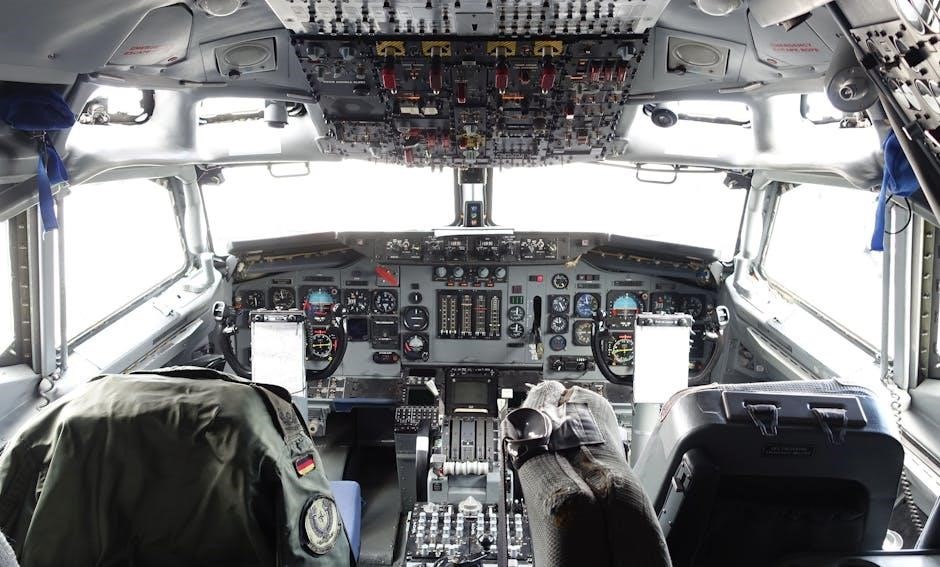
Demonstrate knowledge of the autopilot system, if equipped, and its limitations. Understand the operation of de-icing and anti-icing systems. Examiners may also ask about weight and balance calculations and their effect on aircraft performance. A solid understanding of aircraft documentation is crucial.
VI. Study Materials & Resources
Success hinges on utilizing comprehensive study materials. The FAA Advisory Circular (AC) 61-65 is fundamental, providing detailed guidance on commercial pilot training standards and requirements. Jason Blair’s Commercial Pilot Oral Exam Guidebook is invaluable for preparing for the oral examination, offering realistic questions and detailed answers.
Online ground school programs, such as GroundSchool FAA Knowledge Test, deliver interactive learning experiences and up-to-date FAA questions. Gleim Commercial Pilot FAA Knowledge Test Book provides a structured approach to mastering the knowledge test material, with extensive questions and explanations.
Supplement these resources with pilot operating handbooks (POHs) and aircraft systems manuals for the specific aircraft you’ll be flying. Remember to prioritize current FAA publications and regularly updated study guides for optimal preparation.
A. FAA Advisory Circulars (AC 61-65)

FAA Advisory Circular 61-65 serves as the cornerstone of commercial pilot training, detailing the practical tests for certification. It outlines the acceptable methods, standards, and areas of operation evaluators will assess during your checkride. This document isn’t merely a suggestion; it’s the FAA’s guidance on demonstrating proficiency.
Thoroughly review AC 61-65 to understand the specific maneuvers, procedures, and knowledge areas required for the commercial pilot certificate. Pay close attention to the standards for each area, ensuring your performance meets or exceeds expectations. Familiarize yourself with the risk management considerations and emergency procedures outlined within.
Regularly referencing AC 61-65 throughout your training will ensure alignment with FAA standards and maximize your chances of a successful checkride.
B. Commercial Pilot Oral Exam Guidebooks (Jason Blair)
Jason Blair’s Commercial Pilot Oral Exam Guide is a highly recommended resource for checkride preparation. This guidebook expertly organizes nearly 800 test questions by subject matter, providing a structured approach to studying. It’s designed specifically for applicants pursuing the Commercial Pilot (airplane) Certificate.
Each question is accompanied by multiple-choice answers, detailed explanations for both correct and incorrect options, and references for further study. The inclusion of introductory text and illustrations enhances understanding and retention of complex concepts; Blair’s guide doesn’t just present questions; it teaches the underlying principles.

Utilizing this resource will help you anticipate potential oral exam questions and develop confident, articulate responses, ultimately increasing your preparedness and reducing exam-day anxiety.
C. Online Ground School Programs (GroundSchool FAA Knowledge Test)
GroundSchool FAA Knowledge Test provides a comprehensive and user-friendly platform for preparing for the FAA Commercial Pilot knowledge exam. This online program consolidates all necessary study materials into one easily accessible location, streamlining the learning process.
It features study outlines and illustrative figures, enhancing comprehension of complex aviation topics. GroundSchool allows you to study actual, up-to-date FAA questions, simulating the real exam environment. The program’s adaptive learning technology personalizes the study experience, focusing on areas where you need the most improvement.
With GroundSchool, you can ACE your FAA Commercial Pilot knowledge test efficiently and effectively, benefiting from a proven method for success and a streamlined path to certification.
D. Gleim Commercial Pilot FAA Knowledge Test Book
The Gleim Commercial Pilot FAA Knowledge Test book is designed as the easiest, fastest, and most cost-effective method for passing the FAA knowledge exam. This resource provides a thorough review of all required topics, minimizing study time and maximizing retention.
Gleim’s approach focuses on clear explanations and realistic practice questions, mirroring the format and difficulty of the actual exam. The book includes over 700 hours of content, structured for a 30-week study plan combining instructor-led lectures and computer-based learning.
By utilizing Gleim, aspiring commercial pilots can reduce study materials and exam fees, benefiting from a comprehensive and efficient preparation tool. It’s a trusted resource for achieving a high score and earning your Commercial Pilot Certificate.
VII. Advanced Maneuvers & Performance
Mastering advanced maneuvers and performance calculations is crucial for commercial pilot competency. This section focuses on applying theoretical knowledge to practical flight scenarios, ensuring safe and efficient operation.
Key areas include precise execution of complex maneuvers, understanding aircraft performance limitations, and accurately interpreting performance charts. Pilots will delve into factors affecting takeoff and landing distances, climb and cruise performance, and stall speeds.
Furthermore, a strong grasp of weight and balance calculations is essential for maintaining aircraft stability and control. This involves determining the aircraft’s center of gravity and ensuring it remains within acceptable limits for all flight conditions, directly impacting safety and performance.
A. Performance Calculations
Accurate performance calculations are fundamental to safe and efficient commercial flight operations. Pilots must be proficient in determining aircraft performance under various conditions, utilizing charts and formulas provided in the Aircraft Flight Manual (AFM).
This includes calculating takeoff and landing distances, considering factors like runway length, elevation, temperature, and wind. Understanding climb performance, cruise speed, and fuel consumption is also vital for flight planning and en-route decision-making.
Pilots will learn to apply these calculations to determine optimal flap settings, power settings, and weight limitations, ensuring the aircraft operates within its prescribed limits. Proficiency in performance calculations directly contributes to enhanced safety margins and operational efficiency during all phases of flight.
B. Weight and Balance
Mastering weight and balance is crucial for maintaining aircraft control and stability. Commercial pilots must accurately calculate the aircraft’s center of gravity (CG) and ensure it remains within the allowable limits for all flight conditions.
This involves understanding the effects of weight distribution on aircraft handling characteristics, including pitch stability and control effectiveness. Pilots will learn to use weight and balance charts, considering factors like passenger weight, baggage weight, and fuel load.
Proper weight and balance calculations prevent exceeding weight limits, which could compromise structural integrity and performance. Accurate calculations are essential for safe takeoff, climb, cruise, and landing, ensuring the aircraft operates within its design parameters and maintains optimal flight characteristics.
VIII. Aeroplane Upset Recovery
Aeroplane upset recovery training is a vital component of commercial pilot preparation, focusing on recognizing and responding to unintentional deviations from the normal flight envelope. This training equips pilots to handle situations like stalls, spins, and unusual attitudes effectively.
Pilots learn to promptly identify upset conditions, apply appropriate control inputs to regain control, and recover to a stable flight attitude. Emphasis is placed on smooth, coordinated control movements and avoiding exacerbating the situation with abrupt maneuvers.
Understanding aerodynamic principles and aircraft limitations is key to successful upset recovery. Pilots practice techniques for recovering from various upsets, ensuring they can confidently handle unexpected events and maintain aircraft control in challenging circumstances, prioritizing safety and passenger well-being.
IX. South African CPL Training Requirements (Overview)
Commercial Pilot Licence (CPL) training in South Africa demands adherence to specific regulations set by the South African Civil Aviation Authority (SACAA). A valid Private Pilot Licence (PPL) is a prerequisite, alongside a Class 1 medical certificate ensuring the pilot meets stringent health standards.
The CPL curriculum necessitates a minimum of 200 hours total flight time, encompassing cross-country, night flying, and instrument time components. Theoretical knowledge is assessed through SACAA-administered examinations covering air law, meteorology, navigation, and aircraft technical knowledge.
Successful completion of both flight training and theoretical exams qualifies candidates for the CPL skill test, a practical assessment evaluating piloting proficiency. This overview provides a foundational understanding of the requirements for aspiring commercial pilots in South Africa.